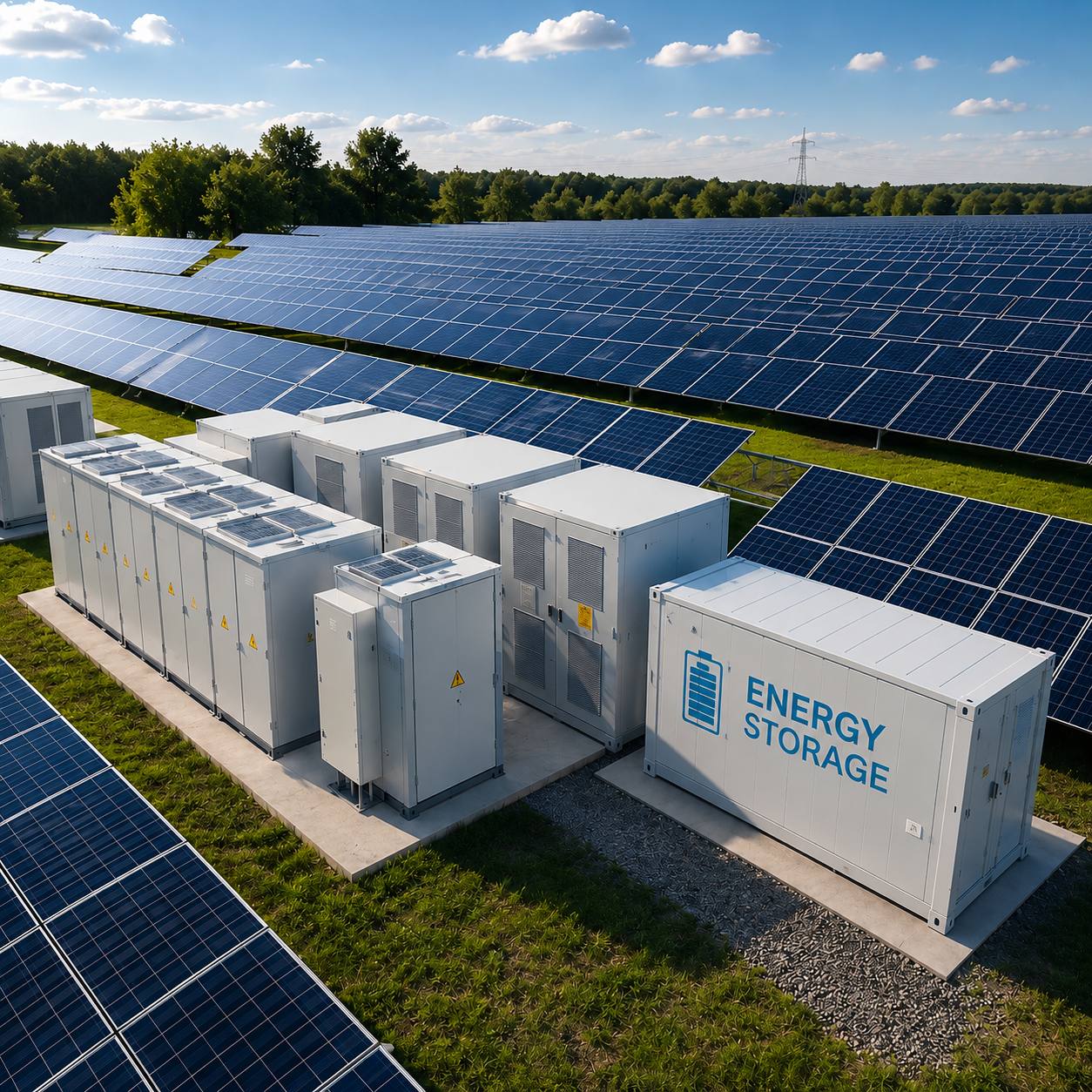
Europe is entering a new phase of the energy transition: why energy storage systems are becoming a key trend in renewable energy development
Over the past few years, EU countries have significantly expanded solar and wind power generation. As the share of renewables continues to grow, some European countries are already experiencing periods when electricity generation from solar and wind exceeds current demand.
This is now driving a new stage of the energy transition.
Today, Europe is focusing not only on deploying new renewable energy capacity, but also on ensuring that the energy system remains stable, flexible, and resilient. Since solar and wind generation depend on weather conditions, energy storage systems are becoming increasingly important for balancing the grid and ensuring a stable electricity supply.
As a result, energy storage has emerged as one of the key energy trends of 2026. These technologies make it possible to store excess electricity during periods of high renewable generation and supply it back to the grid when demand increases. The trend is also being accelerated by declining battery costs. According to the International Renewable Energy Agency (IRENA), storage costs have fallen by 93% since 2010.
According to Reuters, the capacity of European renewable energy projects combined with energy storage systems could increase more than fivefold by 2030.
Such solutions are already being actively deployed in Germany, the United Kingdom, and Central European countries. In particular, the Polish energy company Enea has announced large-scale energy storage projects as part of its new energy transition programme and plans to at least double its renewable energy capital expenditure by 2027.
Europe is gradually moving from a model focused solely on expanding renewable generation toward building a more integrated energy system, where renewables, modern grids, and energy storage technologies operate together to ensure energy security and system stability.
For energy and coal regions, this trend may create new opportunities. These territories often already possess the infrastructure, industrial sites, and skilled workforce that can support the development of the new energy economy.