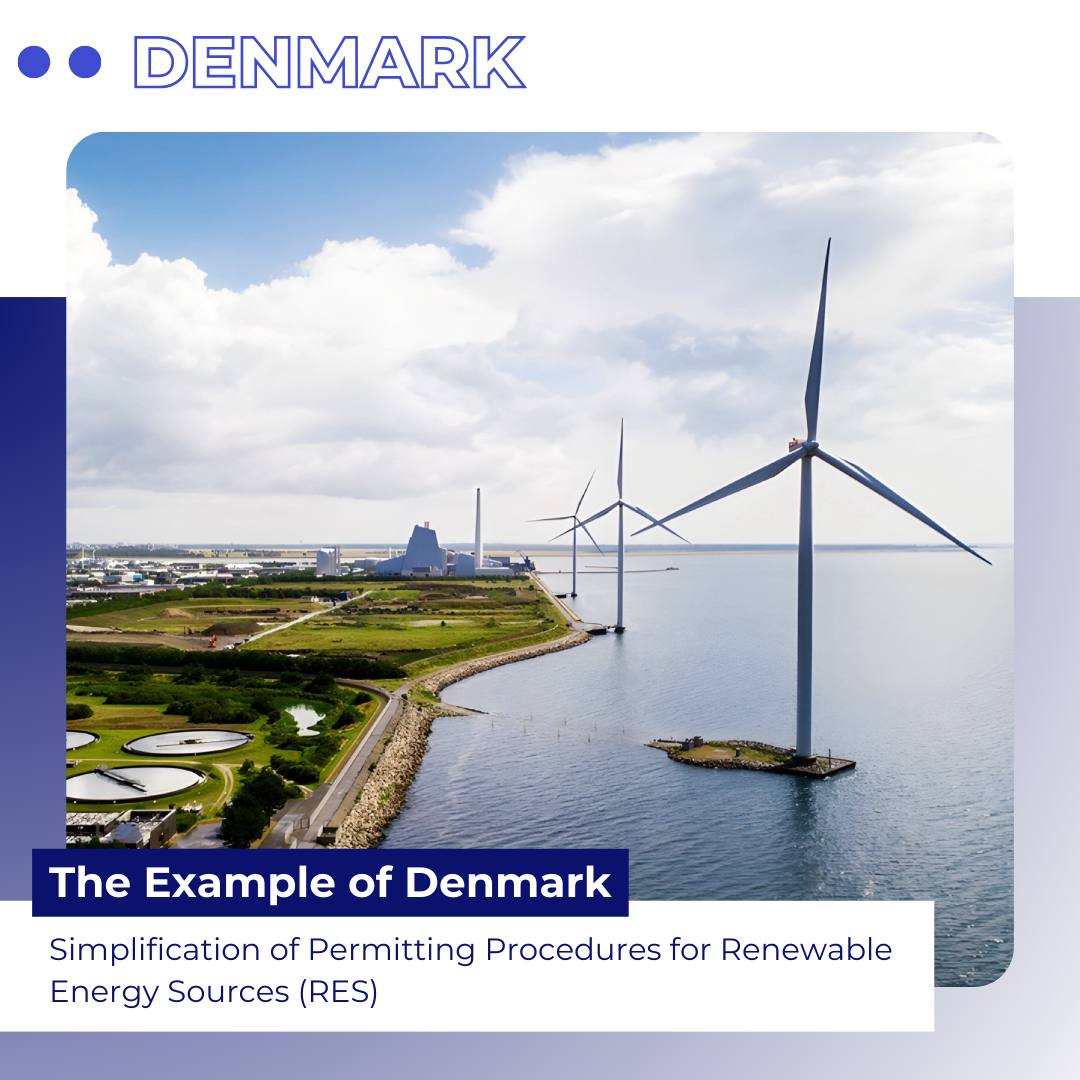
Simplification Permitting Procedures for Renewable Energy: The Exaple of Denmark
The development of renewable energy is a key part of Ukraine’s transition from coal-based industries to a sustainable energy future. Given the urgent need for energy decentralization, this is not just about progress—it is essential for maintaining and stabilizing the country’s entire energy infrastructure.
However, the risks associated with war make it difficult to establish a competitive energy market and attract investment. That’s why Ukraine must adopt a variety of strategies to encourage investors, including those that have already proven effective in Europe.
The European Commission strongly emphasizes the need to improve and streamline permitting procedures for renewable energy projects. One of the most effective tools they recommend is the introduction of a "one-stop shop" model.
This approach creates a single access point where developers can obtain all necessary information and services related to renewable energy investments. Instead of navigating a complex bureaucratic system and dealing with multiple agencies, developers submit their documents to one authorized entity, which then processes and issues the required permits within a specified timeframe.
A standout example of this model in action is the Danish Energy Agency (DEA). For years, Denmark has successfully implemented this approach, contributing to its status as a global leader in wind energy.
The DEA acts as a facilitator between project developers and various regulatory bodies involved in licensing renewable energy facilities. Importantly, while the number of required permits remains the same, the approval process is significantly more efficient. The DEA coordinates with all relevant authorities and ultimately issues a consolidated permit on behalf of multiple government agencies.