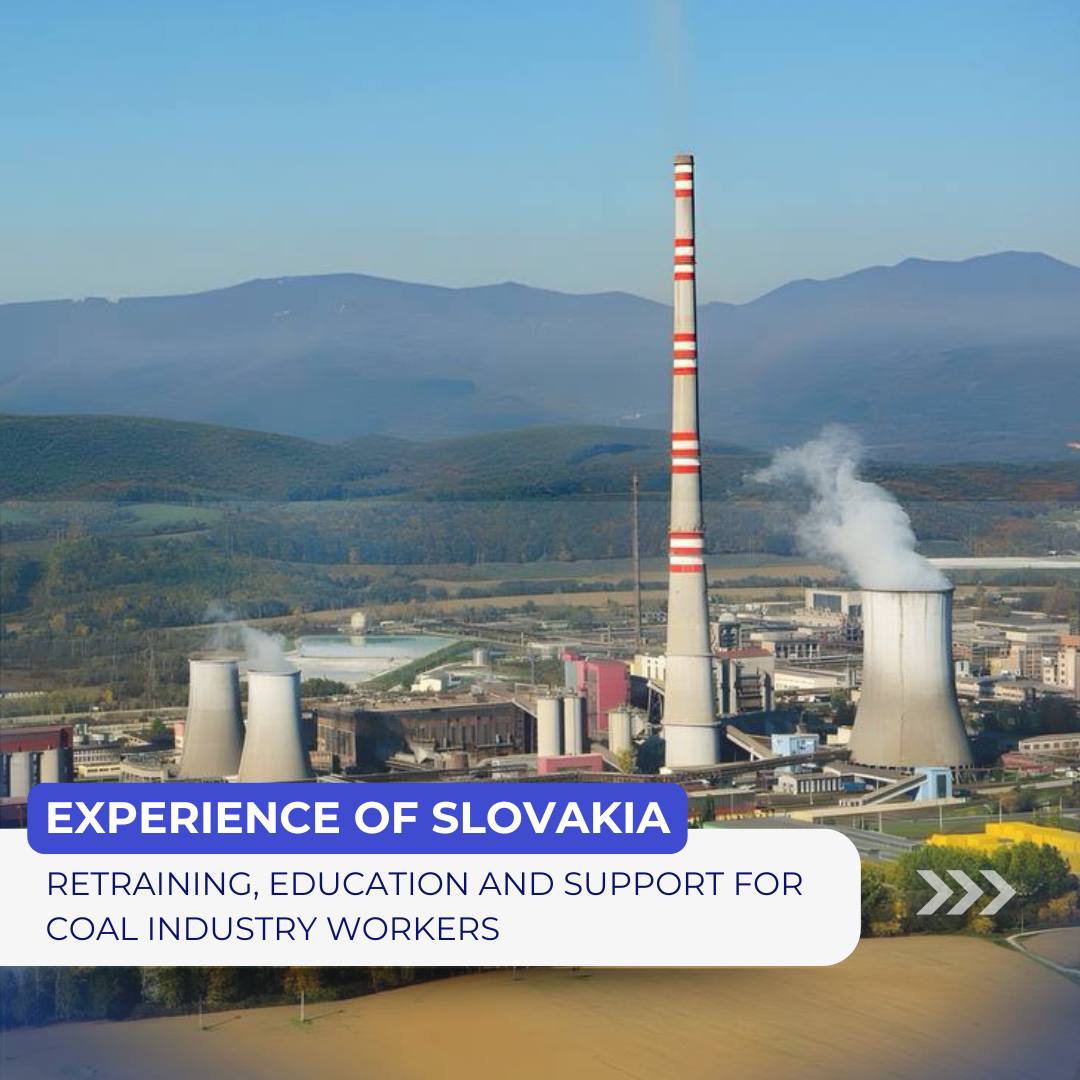
Experience of Slovakia: Retraining, Education, and Support for Coal Industry Workers
The Trenčín Region has long been a center of coal mining in Slovakia. In light of the country’s commitment to phase out solid fuel extraction, an Action Plan to support a just transition was developed in 2018–2019. One of the most successful initiatives under this plan was a large-scale program focused on retraining, education, and support for workers from the coal sector.
The program faced a major challenge: many miners had spent 20 to 30 years in the industry, often in senior roles. They had never attended job interviews or needed to assess their broader skillsets. After decades in mining, they now had to adapt to an entirely new environment.
That’s why the training program was designed to be highly personalized — helping each individual navigate the labor market and choose the most suitable training courses.
Despite this, most workers were initially skeptical of the initiative. A key factor in its success was that participants remained employed by the mining company and continued to receive their average salary during the training period. This helped reduce psychological stress and maintain financial stability throughout the transition.
Over time, word of mouth began to work in the program’s favor. Those who had initially doubted it changed their minds after hearing about the positive experiences of their colleagues. As trust grew, more and more workers joined the initiative.
Under the guidance of experienced instructors and career advisors, participants received tailored support as they explored new career paths. The program offered a wide range of services — from CV and cover letter writing to interview coaching and vocational training in fields like renewable energy, IT, tourism, construction, and small and medium-sized enterprises (SMEs).
Launched in 2023, the support program had already reached over 700 participants by mid-2024.
The Trenčín Region’s experience highlights the importance of starting retraining programs before mine closures begin. This gives workers time to adjust and reduces the stress of the transition.
While engaging the local community posed some early challenges, consistent efforts to build dialogue helped turn obstacles into opportunities.
The active involvement of local residents in shaping their own future became one of the key success factors of this transformation.