Modernizing Educational Programs to Meet Regional Labor Market Needs
This was the central theme of a workshop held in the Sheptytskyi community as part of the project “Robotic Process Automation – A Step Toward Efficiency.” The initiative is implemented with financial support from the European Union, Germany, Poland, and Estonia under the Skills4Recovery Multi-Donor Initiative, carried out by Deutsche Gesellschaft für Internationale Zusammenarbeit (GIZ) GmbH and the Solidarity Fund PL (SFPL).
The event brought together representatives of the Skills4Recovery initiative, the Ministry of Education and Science of Ukraine, the Association of Coal Communities of Ukraine, local authorities, educational institutions, Ukrainian companies, and civil society organizations.
During the workshop, participants engaged in discussions on aligning graduate training with employers’ needs and developing additional student competencies that respond to the current labor market demands.
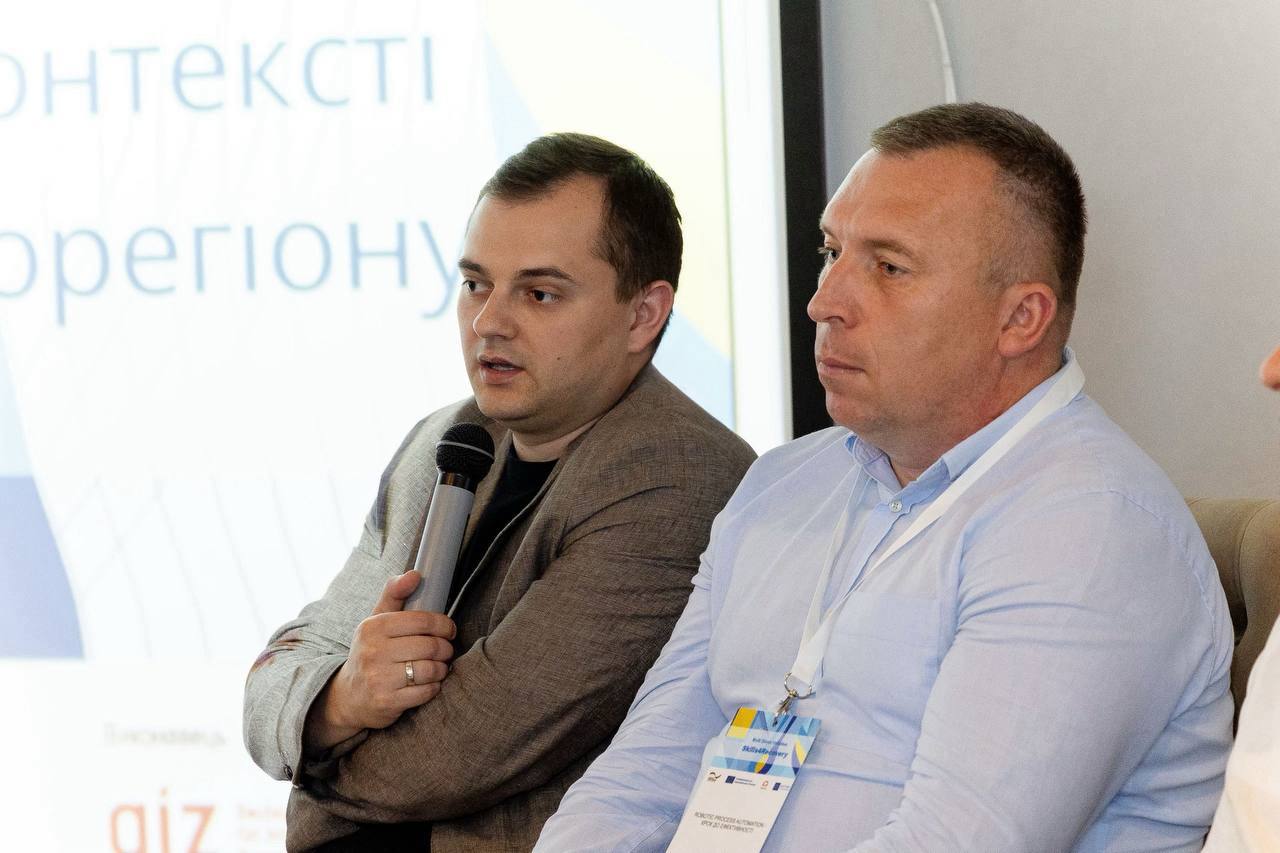
Andriy Tabinskyy, CEO of the Association of Coal Communities of Ukraine, took part in a panel discussion on the synergy between education, business, and government, as well as the need to revise curricula in the context of ongoing transformation.
“The Sheptytskyi community has all the conditions necessary to attract high-quality development projects. The Association is committed to strengthening the institutional capacity of vocational education institutions and mobilizing additional resources. We are always ready to help coal communities with grant applications, but if educational institutions can develop them independently, the overall efficiency will undoubtedly grow.
Vocational education in communities cannot evolve in a vacuum, disconnected from the real needs of the labor market. Educational and research institutions must maintain close cooperation with businesses, which ultimately shape market realities and expectations for future professionals. The responsibility of authorities at all levels today is to provide funding for forward-looking initiatives, facilitate cross-sectoral cooperation, and eliminate bureaucratic obstacles as much as possible—for the sake of real and rapid progress.
It's crucial that on this path of change, we are fully supported by our international partners. Successful project implementation in the Sheptytskyi community, including in vocational education—such as training personnel for the renewable energy sector—proves that long-term and fruitful cooperation between all stakeholders is not only possible, but absolutely essential,” stated Andriy Tabinskyy.