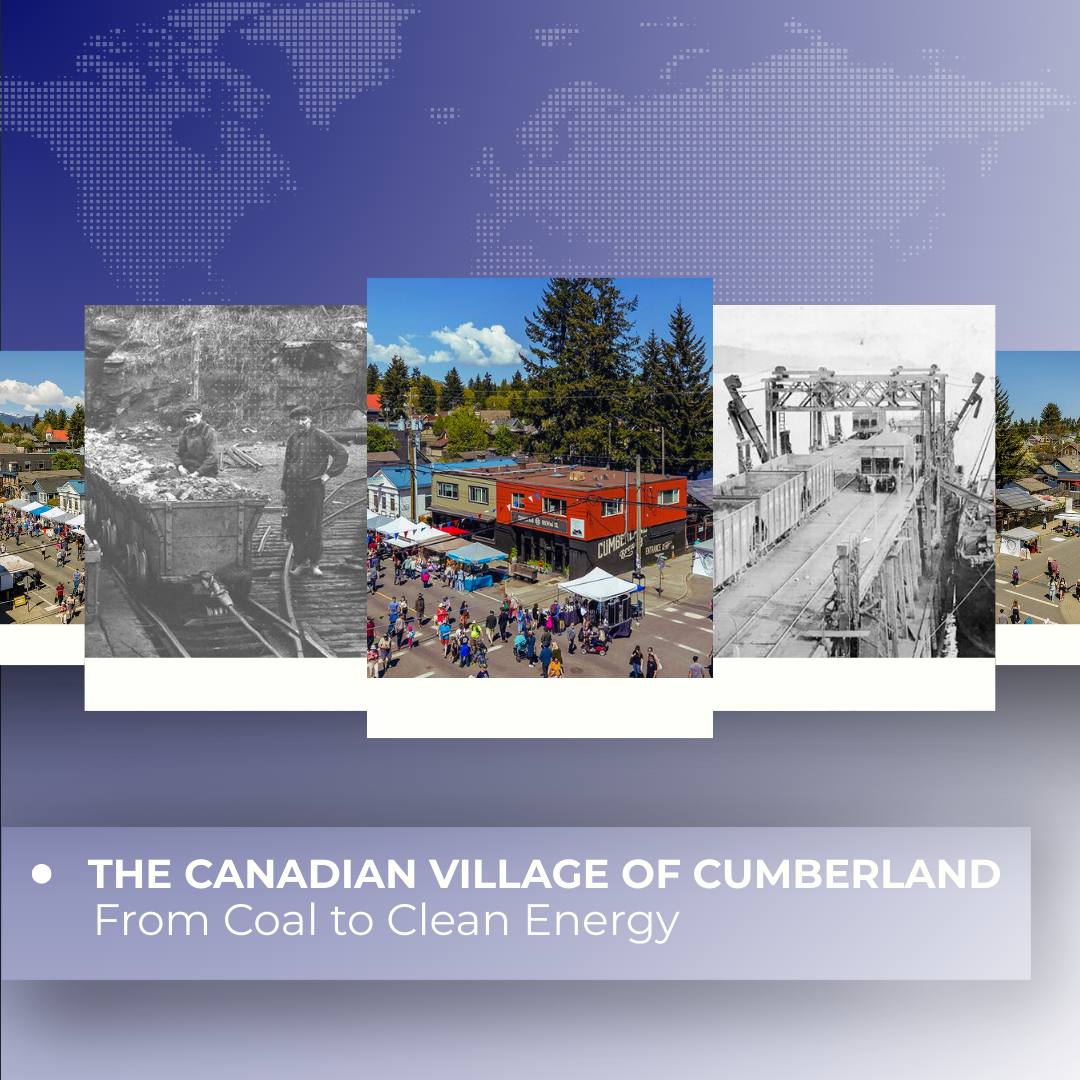
The Canadian Village of Cumberland: From Coal to Clean Energy
When fossil fuel extraction comes to an end, coal communities are often left with aging infrastructure that can become either a financial burden or a new driver of development.
Communities pursuing a just transition are increasingly choosing the latter path. Instead of dismantling or mothballing former mines, they are integrating them into modern energy systems through innovative solutions and advanced technologies.
In the Canadian village of Cumberland, which relied on coal mining for more than 80 years, flooded former mines are now being reimagined as the foundation of a renewable energy system.
Beneath the village lies an extensive network of water-filled tunnels. Rather than investing in the costly drilling of new geothermal wells, the community plans to use the existing mine workings as a natural underground heat exchanger.
The concept is simple yet effective: the water in the mines maintains a stable temperature year-round — warmer than the air in winter and cooler in summer. This allows heat pumps to efficiently provide heating and cooling to buildings with minimal energy consumption. The pilot project envisions connecting public buildings, residential properties, and industrial facilities to a unified network, reducing infrastructure costs and making energy tariffs more predictable.
This approach enables the community to repurpose its industrial heritage instead of dismantling it, while reducing emissions and strengthening the region’s energy independence.